Given PARM partnership with NEPAD and active role in support of the CAADP process in the selected countries in the field of agricultural risk management, PARM was invited to participate and contribute to the discussions, in particular on "building resilience and reduce vulnerability to climate change and other risks through women empowerment".
The event has been an ideal platform to meet with PARM partners at continental, regional and country level as well as to raise visibility and awareness of PARM mandate to other organizations and stakeholders.
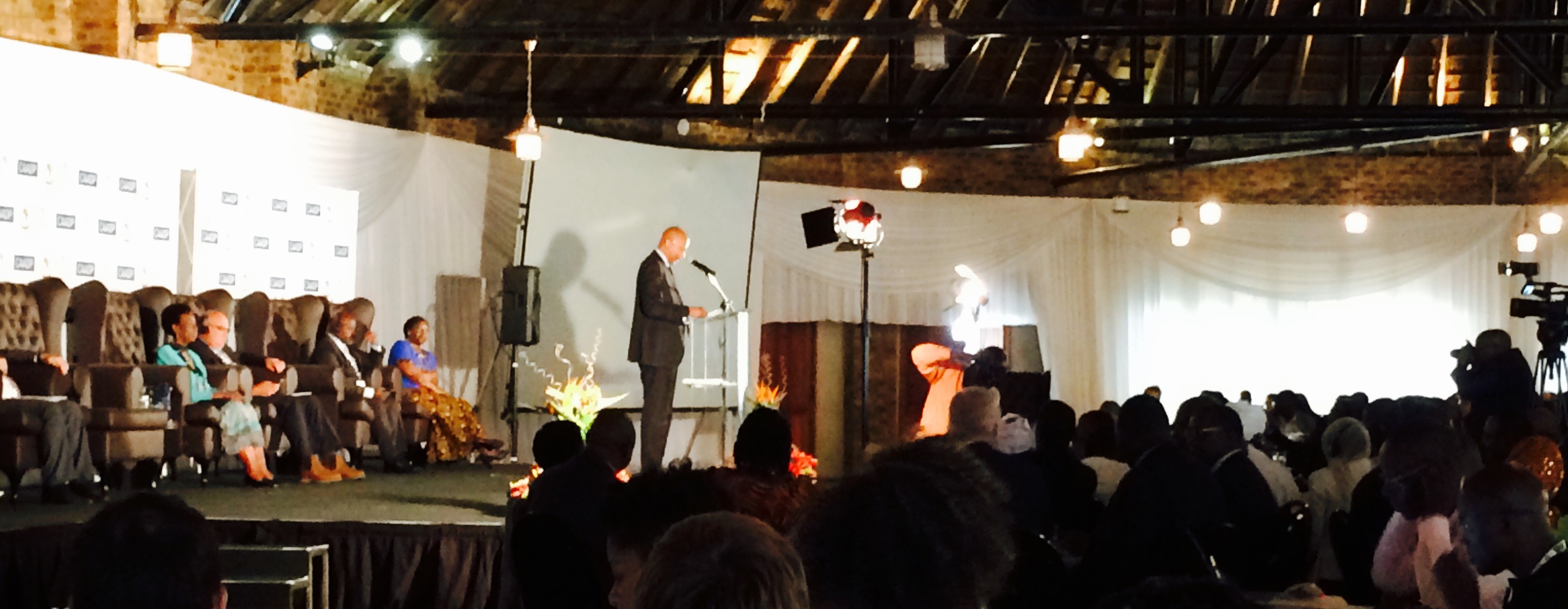
NEPAD Agency’s Chief Executive Officer, Dr Ibrahim Assane Mayaki giving his opening remarks during the 11th CAADP Partnership Platform meeting.
Workshop Objectives
The 11th CAADP Partnership Platform (PP) meeting held in Johannesburg from 23 to 26 March 2015, represented the first CAADP PP after the Malabo Declaration and aimed at building a shared understanding of country and regional needs and form technical partnerships on delivering measurable results and impact around 7 areas of commitment for 2015-2025. These include recommitment on the 10% annual public budget support to agriculture and the 6% annual agriculture productivity growth rate. Goals 2,3.4 and 7 have been selected to frame the 11th CAADP PP sub-themes, under the main theme of “ Walking the talk: Delivering on Malabo Commitments on Agriculture for Women Empowerment and Development”, as follows:
- ending hunger and malnutrition by 2025
- inclusive agricultural growth and transformation for women empowerment
- boosting intra-african trade
- building resilience and reduce vulnerability to climate change and other risks through women empowerment
- mutual accountability to actions, results and impacts.
Workshop Outcomes
Main outcomes coming from the sub-theme breakout group and presented in the plenary were, as follows: (i) the need of African countries to mainstream the budget for resilience building and other risks and take ownership of the process; (ii) the need of infrastructure development; (iii) mutual accountability at all levels and ensure coordination among ministries (finance and agriculture); (iv) spatial management on land use in order to avoid increasing conflict between pastoralists and agriculturists.
A specific focus was given on the importance of developing capacity in country both at farmer level and at government and extension services level. Also it was mentioned the need to strengthen knowledge of available resources and lessons learned from other countries and build transformational leadership to take responsibility. The key stakeholders identified to take action on the goal 7 are at national level: farmers with their indigenous knowledge; governments, knowledge institutions, private sector and NGOS; at regional level: RECs, NEPAD and development partners support in line with the CAADP and country priorities.
In this context, PARM has a major role together with its partners in supporting and strengthening ARM within the CAADP and Malabo declaration framework. Although the discussions were focusing more on resilience, PARM holistic approach still follows and address the needs highlighted above and gives much space to further develop PARM in the region.
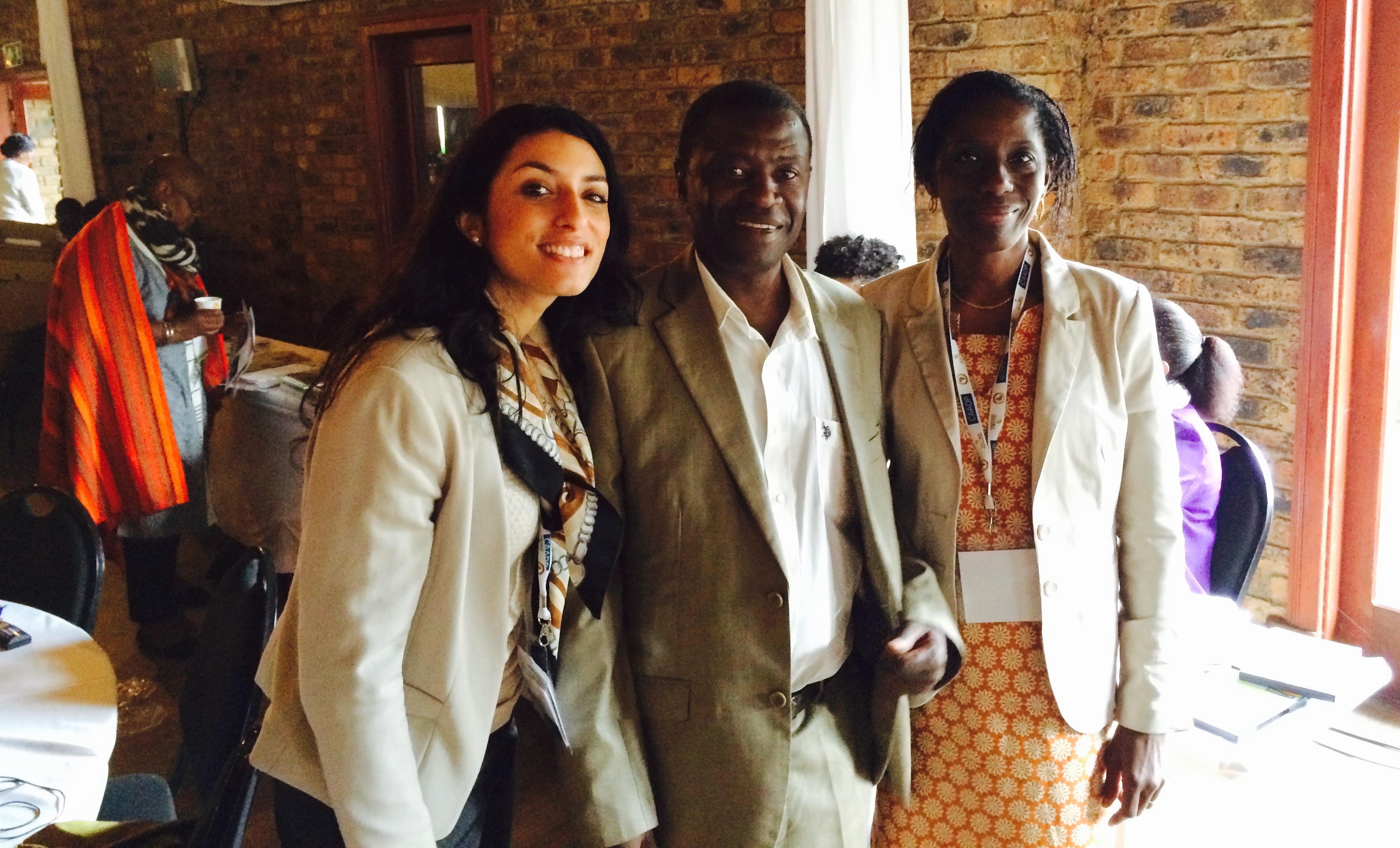
From the left: Karima Cherif, Knowledge Management Officer (PARM), Tom Mugisa, CAADP Focal point for Uganda; Mariam Soumare, Principal Programme Officer, Food Security Analyst (NEPAD).
RELATED DOCUMENTS
- Concept note: [ENGLISH] [FRENCH] [PORTUGUESE]
- Delegate Brief [ENGLISH | FRENCH | PORTUGUESE]
- Results Framework [ENGLISH | FRENCH | PORTUGUESE]
- Implementation Strategy & Roadmap [ENGLISH | FRENCH]
- Malabo Declaration on Accelerated Agricultural Growth and Transformation for Shared Prosperity and Improved Livelihoods adopted June 2014 [ENGLISH | FRENCH]
- Synthesis of the Malabo Declaration on African Agriculture and CAADP [ENGLISH | FRENCH | PORTUGUESE]
- NEPAD Gala Dinner & Programme launch [DOWNLOAD]
- NEPAD Women Agribusiness Forum – Call to Action [ENGLISH | FRENCH]
- The CAADP Programme of Work [ENGLISH | FRENCH | PORTUGUESE]